Undergraduate Diploma in Computing
Course Description
The Diploma in Computing is a practical qualification that will prepare you for a successful career in IT and computing.
The programme will cover areas such as mathematics, programming, data analytics, software development, data structures, computer systems, website design and development, and database design and implementation, amongst many other topics.
Entry Requirements
Candidates who apply for this course must be in possession of the following:
- a qualification at MQF Level 4 in subjects related to Mathematics, Science or Computing (minimum two ‘A’ Levels or equivalent);
AND
- a pass in English at MQF Level 3 (‘O’ Level or equivalent).
Preference is given to students having a Level 4 diploma in engineering or computing and an A-level standard in mathematics.
Target Audience
This course is targeted at:
- Individuals seeking academic and professional advancement in computing.
- Mid-career break professionals looking for opportunities to return or change their career.
Career Paths
The possible positions for which this programme aims to prepare you for include, but are not limited to:
- Data Base Administrator
- IT Technical Support Officer
- Applications Programmer
- Systems Programmer
- Systems Analyst
- Programmer
Modules
You are required to complete all 10 compulsory modules (60ECTS) to fulfil the requirements of this diploma
If you stop here, you will get:
Undergraduate Certificate in Computing
Don’t stop now! Go for that Diploma / Higher Diploma Programme 🚀
🏁 Amazing! You’ve just achieved your Undergraduate Diploma.
Undergraduate Diploma in Computing
Why stop here? Carry on your education with a Undergraduate Higher Diploma in Computing🚀
How you’ll be assessed
The course comprises:
- Evening classes for part-time courses.
- Classes held throughout the day for full-time courses.
- Guided learning, presentations, comprising synchronous online discussions, tutorials and/or videos.
- Self-study hours comprising research, reading and assignment work.
Assessment
Assessment is carried out via two mandatory components:
- Assessment 1
- Assessment 2
The programme includes different forms of assessment which allow for and promote students’ critical engagement. The formative and summative assessment tasks may include an in-class assignment and/or a home-based written assignment using diverse assessment tools which may take the form of online and in-class discussions, examinations, case studies, reports, proposals, essays, and presentations, etc., as applicable to the diverse modules.
Course Intake Dates
Full-time: April | October 2026
Upon successful completion of this course, students will be eligible for a 70% refund of the cost through the ‘Get Qualified’ scheme.**
Due to the modular structure of the course, you may also opt to take individual modules as stand-alone. The entry requirements still apply.***
*Prices are applicable to students who reside in Malta at the time of applying.
Learning Outcomes
For Communication Skills:
The learner will be able to:
- Convey ideas, in a well-structured and coherent way to peers, supervisors and clients.
- Formulate practical and theoretical responses to abstract and concrete problems and makes judgements related to computing.
- Develop presentation skills to share the groupwork experience.
For Learning Skills:
The learner will be able to:
- Evaluate own learning and identify learning needs necessary to undertake further learning.
- Engage with fellow students in peer learning process to share own learning and development and assess and comment on progress of others in context of material being taught.
- Develop advanced knowledge and understanding to systematically and creatively upgrade computing related practices.
- Assess the social, legal, ethical, and cultural issues inherent in the discipline of computing.
- Develop a systematic approach towards organizing and managing group activities to ensure accomplishment of the group objectives.
See what students have to say about our courses
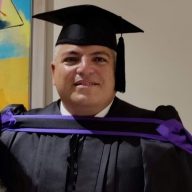
The road is rough and bumpy, but the satisfaction at the end of the journey is priceless. IDEA Academy administration, staff and lecturers made it feel more effortless than it looks. Success isn’t easy, but if you believe you can achieve it. No words can explain my gratitude for all the help and motivation provided throughout the course. It’s never too late to enrich your academic portfolio.
Kevin Borg
M.Sc. in Governance and Management
