Master of Science in Healthcare Management and Leadership
Master of Science
Healthcare Management and Leadership
Get 70% back via Tax Credit
€6,843 refund on this course
Course Description
This comprehensive programme is designed to equip future leaders with complex knowledge, advanced analytical skills, and critical thinking necessary to drive innovation and excellence in the healthcare sector. In alignment with MQF Level 7 descriptors, the programme fosters the development of knowledge at the forefront of healthcare leadership and management, supporting students in the critical understanding and integration of theories, principles, and practices across disciplines.
The programme integrates core areas such as management, leadership, strategy, and operations with the unique complexities of healthcare systems. It enables students to synthesise knowledge from multiple domains, critically evaluate contemporary challenges, and apply advanced problem-solving skills in unpredictable and complex environments.
Students will develop expertise in leadership, financial decision-making, healthcare operations, policy, governance, and evidence-based practice, ensuring they are prepared to make informed decisions that improve patient outcomes, enhance organisational efficiency, and promote ethical and sustainable healthcare practices. The programme emphasises the development of transferable skills (effective communication, leadership, and collaborative competencies), applicable to diverse healthcare settings, from hospitals and clinics to public health organisations and private-sector enterprises. It fosters a high level of personal responsibility, accountability, and self-direction, enabling graduates to manage complex professional activities and contribute to strategic decision-making processes.
A strong emphasis is placed on research-informed and inquiry-based learning. Students will engage with current research, develop advanced academic and methodological skills, and undertake independent research that contributes to the development of new insights and professional practice. The programme supports the enhancement of higher-order cognitive skills, including critical evaluation, synthesis of information, and the ability to formulate and test innovative solutions to complex healthcare challenges. Assessment strategies are designed to reflect MQF Level 7 expectations, requiring students to demonstrate autonomy, originality in thinking, and the application of knowledge in both academic and professional contexts.
This master’s degree fosters a global perspective, incorporating intercultural competence, digital innovation, and emerging trends in healthcare management. Graduates will be equipped to lead teams, manage resources effectively, and implement strategies that advance the quality of care and organisational performance.
Graduates will be equipped not only to lead and manage within diverse healthcare settings, but also to critically engage with evolving systems, integrate knowledge across domains, and contribute to the advancement of both professional practice and academic scholarship in the healthcare sector
Entry Requirements
Candidates who apply for this course must have:
- Level 6 Degree and 2 years’ work experience.
Preference is given to applicants having:
- Level 6 Degree in a discipline related to the Study Programme; and
- A minimum of 2 years’ work experience in management within the sector covered by the Study Programme.
OR
- Level 5 Diploma or Higher Diploma and 5 years’ work experience in a supervisory or managerial role.
* Students whose first language is not English will be required to demonstrate English language capability at IELTS level 6.0 or equivalent.
Target Audience
This course is targeted at Healthcare professionals with work experience; people such as:
- Individuals seeking to advance their academic and professional knowledge in healthcare management.
- Individuals wanting to pursue senior management and leadership careers within the healthcare profession.
- Individuals wanting to enhance their ability to interpret, assess, and communicate healthcare-related information.
Career Paths
This programme is not designed to prepare students for specific warranted professions or regulated occupations.
Instead, it aims to provide participants with the knowledge, skills, and competencies outlined in this curriculum, equipping them for diverse leadership and management roles within the healthcare sector.
This programme is targeted at healthcare professionals, managers, and aspiring leaders seeking to advance their careers in healthcare management. It also caters to individuals from non-healthcare backgrounds who wish to transition into healthcare leadership roles.
Graduates will be well-prepared for senior management and leadership positions in hospitals, healthcare organisations, government agencies, consulting firms, and international health institutions.
Modules
You are required to complete all 6 compulsory modules (36 ECTS), and only 4 elective modules out of the proposed 6 (24 ECTS), as well as the Dissertation (30 ECTS) to fulfil the requirements of this Master’s Degree.
If you stop here, you will get:
Postgraduate Certificate in Healthcare Management and Leadership
Don’t stop now! Go for that Master’s Degree 🚀
If you stop here, you will get:
Postgraduate Diploma in Healthcare Management and Leadership
Don’t stop now! Go for that Master’s Degree 🚀
🏁 Amazing! You’ve just achieved your Master of Science.
Master of Science in Healthcare Management and Leadership
How you’ll be assessed
The course comprises:
- Evening classes for part-time courses.
- Classes held throughout the day for full-time courses.
- Guided learning, presentations, comprising synchronous online discussions, tutorials and/or videos.
- Self-study hours comprising research, reading and assignment work.
Assessment
Assessment is carried out via two mandatory components:
- Modular Assessment
- Dissertation Assessment
The programme includes different forms of assessment which allow for and promote students’ critical engagement. The formative and summative assessment tasks may include an in-class assignment and/or a home-based written assignment using diverse assessment tools which may take the form of online and in-class discussions, examinations, case studies, reports, proposals, essays, and presentations, etc., as applicable to the diverse modules.
Dissertation Assessment
Assessment of dissertations is primarily based on:
- Depth of critical understanding of the theoretical framework
- Application of appropriate research tools
- Critical approach to analysis, interpretation and evaluation of research findings
- Depth and level of argumentation build-up
- Original contribution to the generation of new knowledge/hypothesis/models
- Scholarly presentation meeting academic standards
Course Intake Dates
Part-time: October I Full-time: March | June | November 2026
Learning Outcomes
Competences:
At the end of the module/unit the learner will have acquired the responsibility and autonomy to:
- Demonstrate autonomy and responsibility in leading healthcare organisations and managing complex challenges.
- Develop and implement governance structures and ethical decision-making processes that align with organisational goals and societal expectations.
- Adapt to and manage cultural diversity in organisational settings, promoting inclusivity and intercultural understanding.
- Innovate and drive change by integrating advanced management practices with cutting-edge healthcare solutions.
- Ensure compliance with legal and regulatory requirements, fostering a culture of accountability and excellence within healthcare systems.
- Engage in continuous professional development and reflective practice to stay at the forefront of healthcare leadership and management.
Knowledge:
The programme recognises the diverse academic, professional, and experiential backgrounds of its learners, including mature students with substantial sectoral experience. It is designed to facilitate the critical integration of prior experiential knowledge with contemporary theories, research, and practices in healthcare leadership. This is achieved through a balanced approach to theory and practice, incorporating case-based learning, reflective exercises, problem-based tasks, and work-related assessments that require learners to apply theoretical frameworks to real-world contexts.
At the end of the programme, the learner will be able to:
- Develop and demonstrate an advanced understanding of healthcare systems, policies, and organisational dynamics in diverse local and global contexts.
- Gain expertise in strategic management, financial decision-making, and operational efficiency within healthcare organisations.
- Evaluate evidence-based practices and research methodologies to critically assess and apply relevant findings to improve healthcare outcomes.
- Critically discuss legal, ethical, and governance frameworks to ensure compliance and promote accountability in healthcare organisations.
- Critically analyse advanced leadership theories, cultural competence, and communication strategies for managing teams in complex and multicultural healthcare environments.
- Critically appraise emerging trends, technologies, and innovations in healthcare management, including digital tools and quality improvement methodologies.
Skills:
At the end of the programme, the learner will be able to:
- Lead and manage multidisciplinary teams effectively, fostering collaboration and motivation.
- Critically analyse and interpret financial statements, budgetary data, and economic trends to make informed decisions.
- Design and implement strategies for organisational change, quality improvement, and operational excellence.
- Apply evidence-based research to solve practical problems and enhance healthcare delivery.
- Communicate complex concepts and strategies clearly and effectively to diverse audiences, including stakeholders, employees, and patients.
- Utilise digital tools and data analytics to improve decision-making, resource management, and operational efficiency.
See what students have to say about our courses

I learnt a lot from my lectures at IDEA Academy. I very much recommend IDEA Academy – help is found every time you need it and they are flexible, especially towards part-time students such as as myself. My message to prospective students is that it is never too late to start or continue studying.
Maria Borg
M.Sc. in Healthcare Management and Leadership
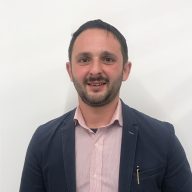
My experience at IDEA Academy was exceptional. IDEA have their students at heart and they provide a high level of support. They walk alongside their students throughout the entire journey to make it possible for them to succeed.
Aaron Refalo
M.Sc in Healthcare Management and Leadership
